


Because safety isn’t just about radiation — it’s about hygiene too.
In every interventional or surgical suite, radiation protection aprons are more than just lead-lined garments — they are front-line barriers between the doctor and multiple invisible hazards.
While their primary function is to block X-ray scatter radiation, they are also exposed to blood, bodily fluids, and airborne pathogens during medical procedures.
Without proper protection on the outer surface, these fluids can harbour bacteria, fungi, and other microbes, posing a risk of cross-infection and contamination over time.
That’s where antimicrobial fabric becomes indispensable.
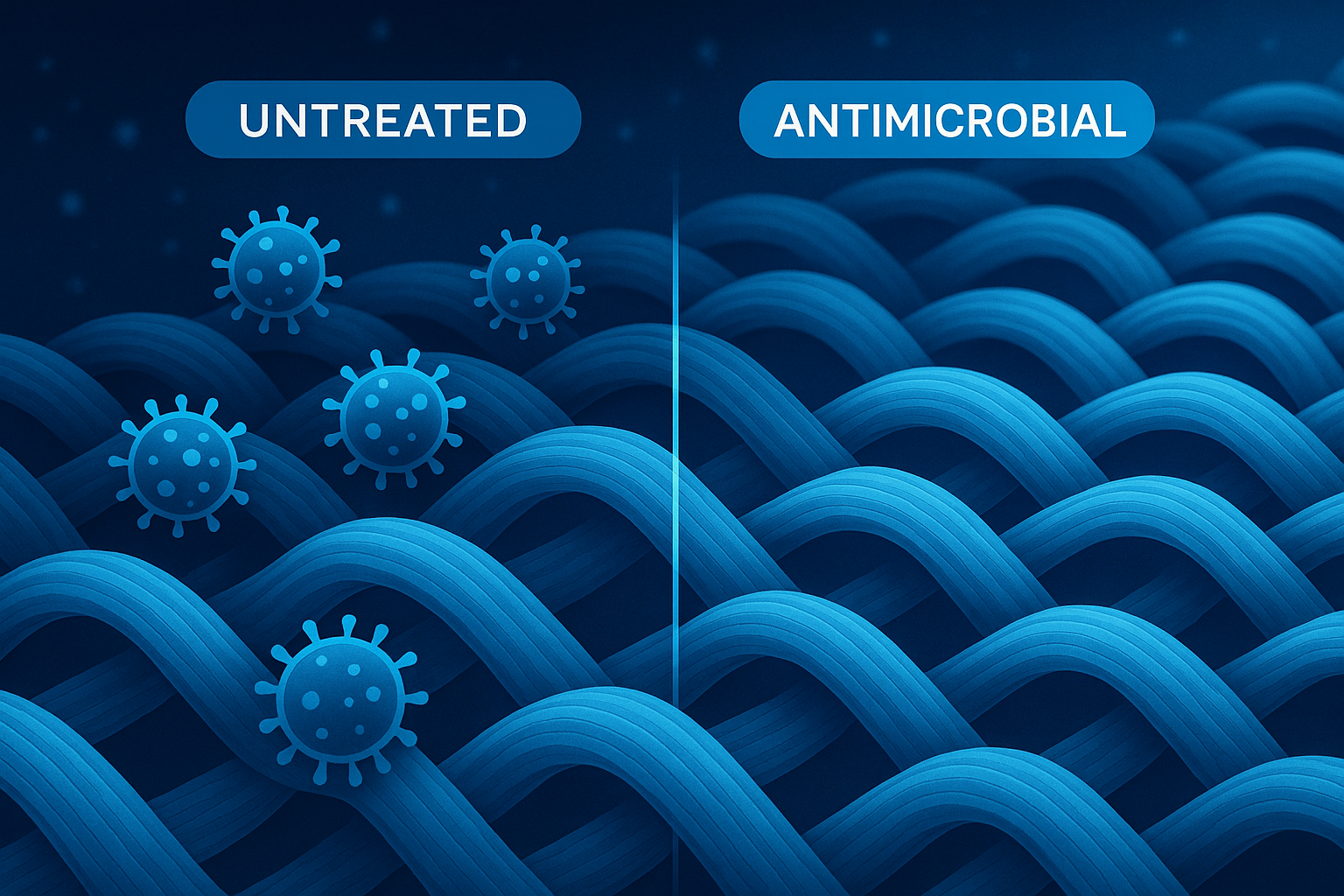
1. What Is Antimicrobial Fabric?
Antimicrobial fabric is a specially engineered textile treated with agents that inhibit the growth and multiplication of microorganisms such as bacteria, fungi, and viruses on its surface.
These fabrics are often infused or coated with silver ions, quaternary ammonium compounds, or advanced polymeric coatings that actively disrupt microbial cell walls, preventing colonisation and odour formation.
In radiation protection apparel, this antimicrobial property is integrated into the outer cover fabric that encapsulates the shielding core material.
2. Why It Matters in Radiation Protection Aprons
Radiation protection aprons are used in sterile and semi-sterile environments — cath labs, operating theatres, and interventional radiology suites — where biological exposure is unavoidable.
During procedures, the apron’s outer layer can come into contact with:
- Blood splatter
- Saline and body fluids
- Aerosolised contaminants
- Gloved hands and surgical surfaces
If these residues are not completely cleaned, the apron surface can become a breeding ground for bacteria and fungi within hours — especially under warm operating-room conditions.
Over time, this leads to:
- Unpleasant odours
- Surface discolouration and staining
- Reduced hygiene and professional safety
- Potential hospital-acquired infection risks
Using antimicrobial outer fabric ensures that even between cleaning cycles, microbial growth is inhibited, keeping both the user and the environment safe.
3. How Antimicrobial Fabric Works
The antimicrobial treatment works through biocidal or biostatic mechanisms, depending on the chemistry used.
These properties do not affect the radiation attenuation core, since the antimicrobial layer is applied only to the outer textile cover, ensuring durability and washability.
4. Benefits of Antimicrobial Outer Fabrics
a. Infection Control
Minimises microbial load and contamination risk during high-exposure procedures.
b. Enhanced Hygiene Between Cleans
Even if immediate cleaning isn’t possible, the fabric remains hygienically stable.
c. Odour and Stain Resistance
Prevents unpleasant odours and surface stains caused by organic residue.
d. Prolonged Apron Lifespan
Reduces degradation and surface wear due to microbial action, extending usable life.
e. Patient and Staff Confidence
Promotes a visibly clean, professional, and safe working environment — essential in sterile zones.
5. Regulatory Relevance: Beyond Protection, Into Prevention
While IEC 61331-1:2014 and 61331-3:2014 govern the radiation attenuation and design safety of protective apparel, hospitals today also follow infection-control mandates from:
- World Health Organization (WHO)
- Occupational Safety and Health Administration (OSHA)
- Hospital Infection Control Committees (HICCs)
Antimicrobial fabrics align with these protocols by providing dual protection — radiation + biological safety.
It’s a modern approach to occupational health compliance, especially in hybrid and interventional theatres where both exposure types coexist.
6. Zittron’s Approach to Antimicrobial Innovation
At Zittron, every radiation protection apron and accessory is designed with multi-layer safety in mind.
Our outer cover fabrics are treated with advanced antimicrobial coatings that:
- Actively inhibit microbial growth on contact
- Resist repeated washing and disinfecting cycles
- Maintain flexibility, colour, and breathability
Whether used in Coat Aprons, Double-Sided Aprons, or Skirt & Vest models, Zittron’s antimicrobial fabrics ensure protection beyond radiation — because hygiene is as vital as shielding.
7. Cleaning & Care Best Practices
Even with antimicrobial protection, routine cleaning remains essential.
Recommended Care:
- Wipe the apron surface with approved hospital disinfectants after each use
- Avoid harsh solvents or chlorine bleach
- Ensure aprons are hung properly and not folded when wet
- Inspect seams and closures regularly for damage
This ensures both infection control and product longevity.
Final Word: The Unseen Shield That Protects Twice
In modern healthcare, radiation safety and infection control are inseparable.
While lead or composite cores shield against X-rays, only an antimicrobial outer fabric can protect against the biological threats of the operating environment.
Choosing an apron with antimicrobial fabric isn’t a luxury — it’s a necessity for every doctor who values hygiene as much as safety.
At Zittron, we believe protection must work inside and out — because real safety is Curated for Safety.
👉 Explore Zittron’s Antimicrobial Radiation Protection Range
👉 Contact us to know more about materials that combine radiation safety with infection control.
Subscribe to our newsletter
Get expert insights, product updates and the latest advancements in radiation protection delivered to your inbox.
Thank you! Your submission has been received!
Oops! Something went wrong while submitting the form.
By clicking Submit, you agree to receive newsletters, product updates, technical articles and marketing communications from Zittron. You may unsubscribe at any time. Your information will be handled in accordance with our Privacy Policy and Newsletter Terms.
Blog
Related posts
Explore more articles designed to help you protect better, work safer and stay informed.

Backscatter Radiation in Medical Imaging: Causes, Risks & Control Mechanisms
In every X-ray, fluoroscopy, or interventional procedure, not all radiation travels straight from source to detector. Some photons bounce back — reflecting off the patient, table, or shielding surfaces — and return toward the operator. This reflected component is known as backscatter radiation.
Events
Innovation
Products
View All

Fluorescence in Radiation Shielding Materials: How Secondary X-rays Impact Safety and Image Quality
In every X-ray and fluoroscopy environment, radiation protection garments play a vital role in safeguarding healthcare professionals from scatter exposure.
Events
Innovation
View All
Importance of Lead-Free Radiation Protection Aprons (Verde): Controlling Fluorescence and Backscatter
Traditional lead aprons have long been the standard for radiation shielding in X-ray and fluoroscopic procedures. However, with evolving material science and safety research, lead-free aprons like Zittron’s Verde are emerging as the new benchmark for modern protection.
Events
Products
Innovation
View All
Let’s Protect What Matters
Thank you! Your submission has been received!
Oops! Something went wrong while submitting the form.